
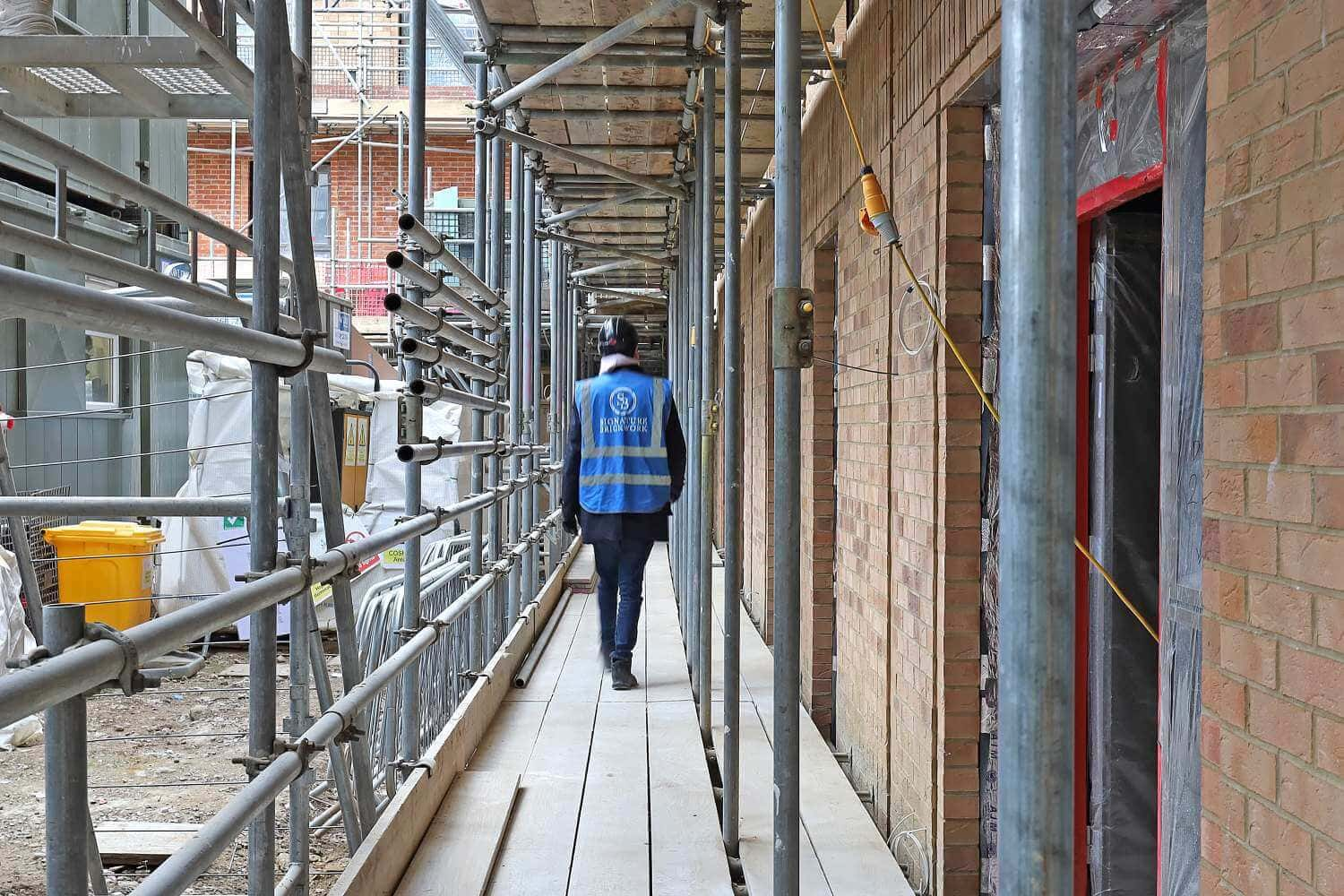
Finding the right brick match for an extension or refurbishment can be quite the ordeal. In a city as architecturally varied as London, it is a challenge that catches out even experienced developers. A brick matching company in London needs to understand the capital’s varied building history, from Victorian terraces to post-war developments. The capital’s built environment spans nearly four centuries, with each era leaving behind its own clay body, bond pattern, and mortar profile. Get the match wrong, and the mismatch is permanent, visible, and expensive to undo. This guide covers what professional brick matching involves and why the contractor you choose makes all the difference.
Why Brick Matching Is a Specialist Discipline
London is not a single-brick city. The yellow stock bricks that define Victorian terraces across Islington, Hackney, and Lewisham were fired from Thames Valley brickearth. This material weathers to a characteristic buff-yellow that no modern production brick reliably replicates. Edwardian properties introduced darker Fletton bricks from the Peterborough beds. Post-war construction brought engineering bricks, calcium silicate units, and early concrete blockwork into the mix.
Each generation of construction used what was locally abundant and cheapest at the time. The result is that a single street in Zone 2 can contain four or five distinct brick types sitting metres apart. When a new extension or structural repair is required, the new brickwork must integrate convincingly with whichever type defines the host property. That demands more than a colour approximation. It demands a professional brickwork contractor in London who understands the material history as well as the build programme.
The Four Variables That Determine a Successful Match
Experienced bricklaying companies in London assess four core variables before specifying replacement or complementary bricks. A working knowledge of these will help you brief a contractor accurately and assess the samples they bring back.
Colour and clay body — Surface colour alone is a poor guide. Two bricks can look similar under a showroom light and read completely differently on an exterior wall in overcast London daylight. What matters is the underlying clay body and how it weathers over time. Reclaimed London stock bricks, for instance, carry a patina that no new brick will replicate immediately. Some manufacturers now produce aged or tumbled equivalents that close the gap.
Texture and surface finish — Wire-cut, sand-faced, hand-thrown, and pressed bricks each carry a distinct surface character. This affects how a wall reads at distance and up close. A smooth new brick set against a rough-faced Victorian original will always look added-on, regardless of how close the colour match is.
Coursing and format dimensions — Imperial bricks used before metrication in 1969 measure approximately 73mm in height against the modern standard of 65mm. That 8mm difference compounds across every course. It can produce visible misalignment at the junction between old and new work if not properly managed. A competent contractor working on brickwork near London will account for this during the setting-out stage, rather than retrospectively.
Mortar specification and profile — Mortar is frequently underestimated. The colour, joint width, and profile, whether recessed, flush, bucket-handle, or struck, contribute as much to the visual character of a wall as the brick itself. Critically, older lime-based mortars must never be replaced with hard Portland cement mixes. Cement is stronger than the surrounding brick and forces moisture movement back into the masonry unit, accelerating spalling and long-term structural deterioration.
Sourcing: Manufacturer Stock vs Reclamation
A brick matching company in London typically operates across two supply channels. Knowing which to use, and when, is a core part of the expertise required for accurate matching.
For properties built from the 1980s onwards, a manufacturer match is usually achievable. Ibstock, Wienerberger, and Forterra between them cover a broad range of finishes and clay types. Many also retain archive records of discontinued lines that can be cross-referenced against samples. Lead times are predictable, and batch consistency is reliable, which simplifies programme planning.
For anything pre-1960, particularly the Victorian and Edwardian stock that dominates inner London, reclamation is the more dependable route. Major reclamation yards, concentrated in Essex, Kent, and parts of the South East, hold substantial volumes of original London stock, Flettons, and handmade facing bricks recovered from demolition projects across the region. Quality varies considerably between yards and even between batches within the same yard. A specialist contractor with established supplier relationships can assess and approve material before it leaves the yard. This can save programme delays caused by rejecting a delivery on site.
One practical point worth knowing is that reclaimed brick availability is finite and non-replenishable. If a mid-project shortfall requires sourcing a second batch, the tonal variation between the two lots can be visible in the finished wall. Securing the full project quantity, with a wastage margin, before work begins is standard practice for a well-managed brickwork programme.
The Matching Process in Practice
Brick matching is systematic work. A physical sample is taken from the existing elevation, ideally from a section that has weathered consistently with the main face. A sheltered or recently repointed area may not provide an accurate representation of the original brick. The sample then drives the colour, texture, and format specification for sourcing.
Two or three candidate bricks are typically shortlisted and used to lay sample panels on site. These panels are reviewed under natural daylight at different times of day. The way a brick reads at noon and at four in the afternoon in winter can be noticeably different. Client and planning authority sign-off at this stage avoids costly changes once bricklaying is underway.
Mortar trials run in parallel. Achieving the right mortar colour and joint profile is as iterative as matching the brick itself. On lime-specified projects, the mix design requires careful calibration to ensure workability alongside compatibility with the existing substrate.
Extensions and the Junction Detail
Domestic extensions are among the most demanding projects involving brickwork near London for matching purposes. This is not necessarily because of their scale. The challenge comes from the permanent junction between old and new fabric, which is viewed at close range every day.
The return wall, where the new structure meets the original, requires careful planning of the bond pattern. Perpend joints should not align between old and new work, and the new courses must tie in correctly with the existing ones. If the specification calls for toothing into the original wall rather than a simple butt joint, the work requires patience and precision. Toothing done carelessly leaves a staggered visual line that the eye picks out immediately.
Many London boroughs, particularly those with Article 4 directions or conservation area designations, require extension materials to match the host property as closely as practicable as a condition of consent. Retaining a documented record of the matching process, including sample panels, supplier delivery notes, and mortar specifications, supports the discharge of planning conditions. It also protects the client if queries arise post-completion.
What to Look For in a Brickwork Contractor
Look for a professional brickwork contractor in London who can demonstrate completed brick matching work across a range of property types and construction periods. References from residential extension projects and commercial refurbishments are both relevant, as the discipline remains the same even when the scale differs.
Programme management matters as much as technical capability. Brick sourcing, particularly through reclamation channels, takes time. A dependable bricklaying company in London will initiate the sourcing process well before groundworks are complete. Materials should not be treated as something to arrange once the scaffolding is up. Delays caused by late or mismatched brick deliveries are among the most avoidable programme risks on a London refurbishment project. They often trace back to a contractor who left the matching process too late.
FAQS
1. How closely does a brick match need to be for planning approval?
Most London boroughs require materials to match the host property as closely as practicable. In conservation areas and Article 4 zones, the bar is higher. Planning officers may also carry out a site inspection before confirming discharge of conditions. A professional brickwork contractor in London will document the sampling and approval process to support this at every stage.
2. Is it always possible to match Victorian London stock bricks?
A precise match is rarely achievable, but a convincing one usually is. Reclamation yards across the South East hold substantial volumes of original London stock. Mortar specification and joint profile are equally important. The right mortar can make a near-match read as seamless on the finished elevation.
3. How long does brick matching and sourcing take?
Allow three to four weeks for sampling, panel review, and sourcing confirmation. Larger quantities of reclaimed material may require longer. A reputable brickwork contractor near London should build this lead time into the programme from the outset.
4. What is the risk of using a general contractor rather than a specialist?
A general bricklayer will construct to a specification but may lack the supplier relationships and material knowledge needed to source and evaluate samples effectively. A brick matching company in London treats sourcing and specification as a core part of the service rather than a secondary consideration.
5. Do you handle brick matching on commercial and mixed-use refurbishments?
Yes. The methodology is consistent across residential extensions, commercial façade refurbishments, and heritage-adjacent new-build schemes. Project scale changes, but the discipline does not.
For brick matching, brickwork packages, and professional brickwork contractor in London services, contact the Signature Brickwork team to discuss your project requirements.