
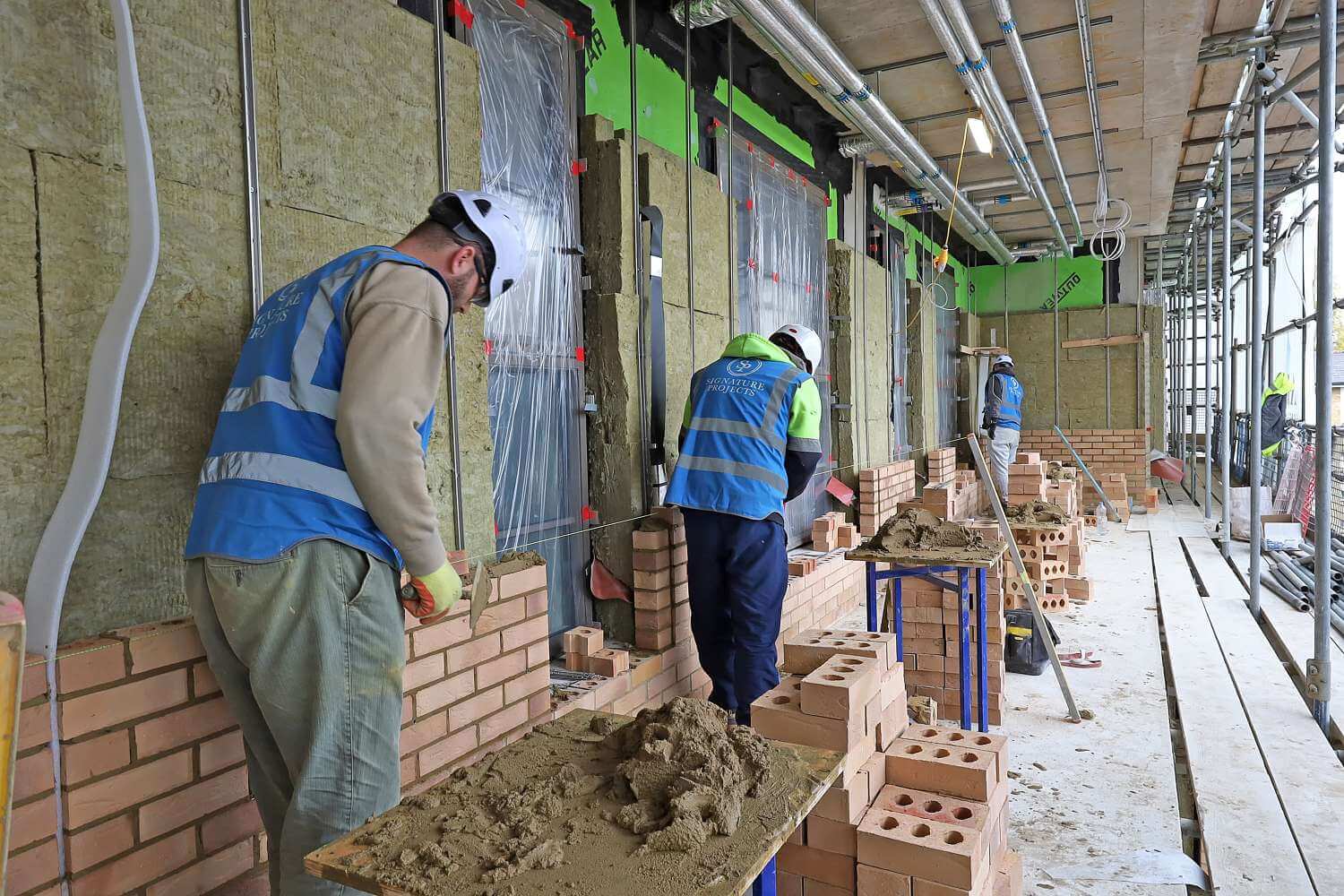
Brickwork problems rarely appear all at once. Most buildings show small signs first. Mortar begins to crumble, joints open slightly, and a brick starts to rock when pressed. These issues are easy to ignore because they do not look serious at first. Over time, water gets in, and damp spreads internally. Freeze and thaw cycles widen the damage, and by the time cracking is obvious, repairs are no longer simple. It signifies the need for reliable labour resources in London.

Many property owners only act once staining or dampness appears inside. At that point, costs increase and options narrow. Early inspection keeps repairs contained and prevents unnecessary replacement work.
If brick deterioration is visible, Signature Brickwork can assess the masonry and explain what actually needs attention before the damage worsens.
Why Skilled Labour Makes the Difference in Brickwork
Brickwork is not forgiving. Mistakes stay visible, and poor repairs often fail faster than the original work. This is why dependable labour resources in London matter on restoration projects.
Good bricklayers work methodically. They prepare joints properly. They match mortar carefully. They do not rush to finish. Poor labour skips steps. That usually leads to weak joints, uneven lines, and trapped moisture.
On restoration work, labour quality affects:
- How well does the new work blend with the existing brickwork
- Whether the mortar bonds correctly
- How long does the repair last
- Whether further repairs are needed within a few years
Older buildings are especially sensitive. Incorrect materials or rushed work can cause lasting damage.
What Brick Restoration Near London Usually Involves
Most properties needing brick restoration near London are dealing with age, exposure, or previous poor repairs. Full replacement is rarely required.
Restoration work typically focuses on removing failed bricks, installing suitable replacements, repairing surrounding mortar, and cleaning surfaces using safe methods. The goal is stability, not cosmetic improvement.
Good restoration should not draw attention. If repaired areas stand out, something has gone wrong.
Why Repointing Is Structural Work
A failed mortar is not just a visual issue. Once joints break down, water enters the wall. That moisture leads to damp, frost damage, and movement within the masonry.
This is why repointing brick near London is a maintenance task, not decoration.
Correct repointing means removing mortar to the proper depth, cleaning joints thoroughly, and using a mortar that suits the brick. Hard cement mortars on older buildings often cause bricks to crack or spall. These failures usually appear years later, long after the work is paid for.
Brickwork on Occupied and Live Sites
A great deal of brickwork takes place on occupied properties. Access is limited. Safety matters. Sequencing matters.
Repairs fail when trades are rotated too often or pushed to move quickly. Controlled progress and regular checks are what keep repairs consistent across elevations.
Well-managed sites avoid rework. Poorly managed sites create it.
When Brickwork Should Be Repaired
Brickwork does not fix itself. Waiting almost always increases cost.
Common warning signs include:
- Mortar falling out of joints
- Cracks following mortar lines
- Internal damp near external walls
- Bricks that move when pressed
- White deposits forming on brick faces
Addressing these early keeps repairs straightforward.
Choosing the Correct Level of Repair
Not every building needs full restoration. In many cases, targeted repairs are enough if the issue is caught early.
The key is assessment. Knowing what to leave alone is just as important as knowing what to repair. Clear advice prevents unnecessary work and avoids short-term fixes that fail.
For brickwork projects that require experience, careful judgement, and controlled workmanship, Signature Brickwork provides brickwork services across London and the surrounding areas.
FAQ’S
1. What is the difference between brick restoration and repointing?
Brick restoration deals with damaged bricks. Repointing focuses on failed mortar joints. They solve different problems.
2. Why do labour resources in London matter for brickwork?
Brickwork quality depends on skill and consistency. Experienced labour resources in London reduce errors and extend the life of repairs.
3. How often does brickwork need repointing?
Many buildings need repointing every 30 to 60 years. Exposure and previous repairs can shorten that timeframe.
4. Can brick restoration near London be done on occupied buildings?
Yes. With proper access planning, work can be completed with limited disruption.
5. Does the weather affect repointing brick near London?
Yes. Mortar needs suitable conditions to cure properly. Cold, wet, or very hot weather affects performance.